UI / UX Design
Outlay AI
An AI-powered platform for effortless expense tracking, insights, and smarter financial decisions.
Year :
2025
Industry :
AI, Banking and Fintech
Client :
Concept Product
Project Duration :
2 months
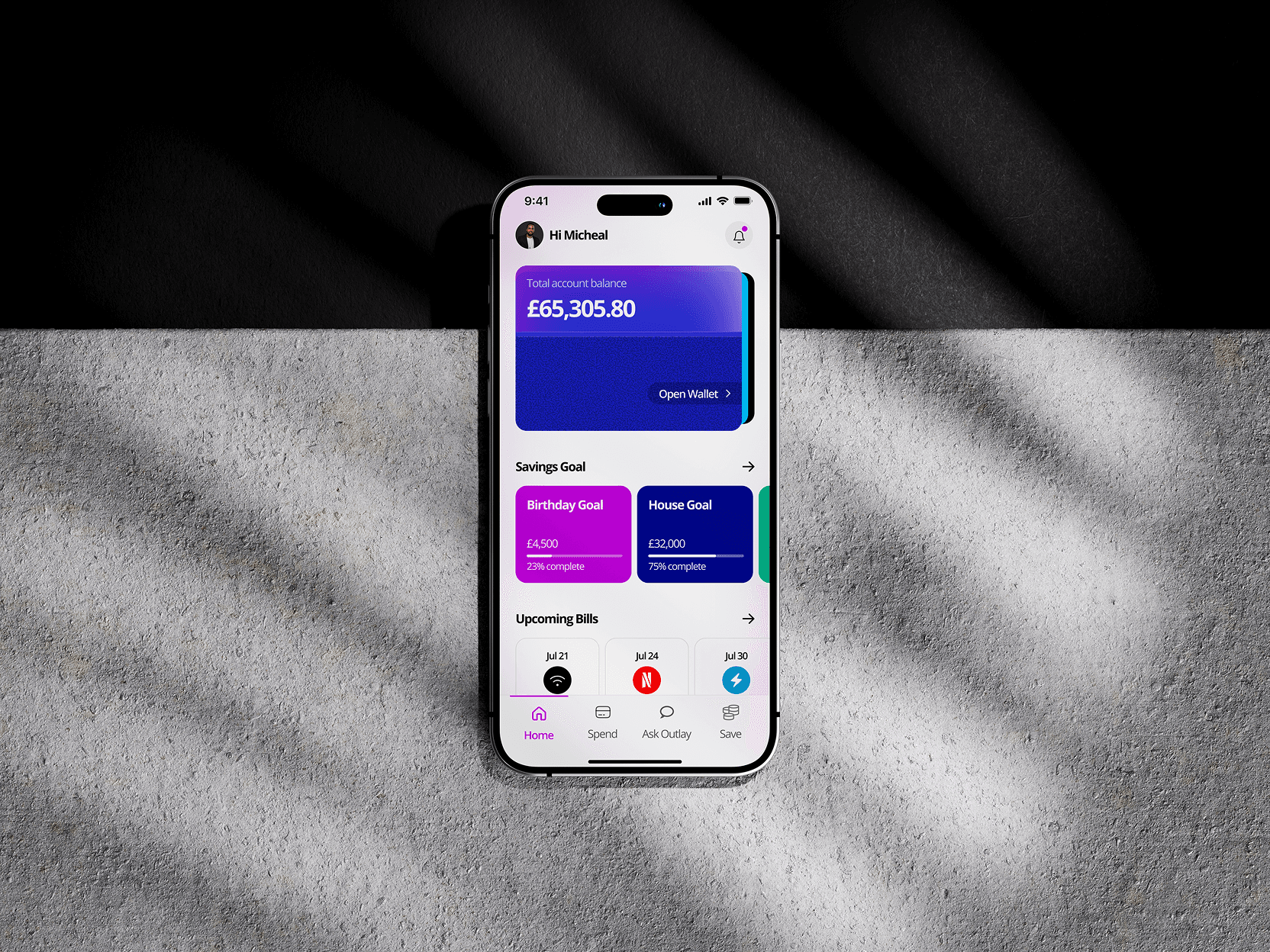
Overview :
OutlayAI is an AI-powered expense coaching platform designed to help users proactively manage their finances, reduce unnecessary spending, and build sustainable financial habits.
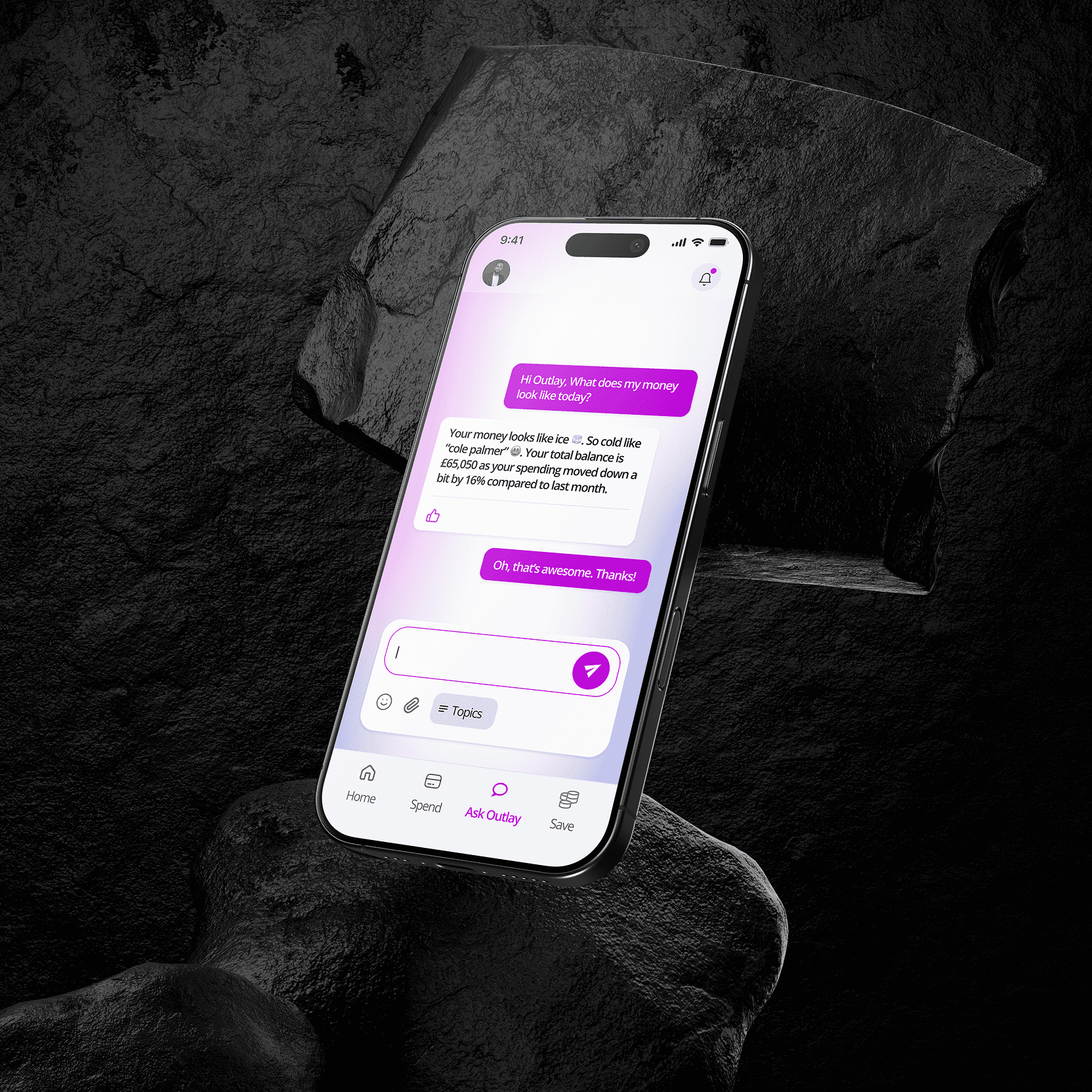
This project explores how intelligent systems can move beyond passive tracking to actively guide users toward better financial outcomes. This solution will enable users to automate transactions across their connected accounts, set smart budgets, and offers personalized financial advice in an interactive way.
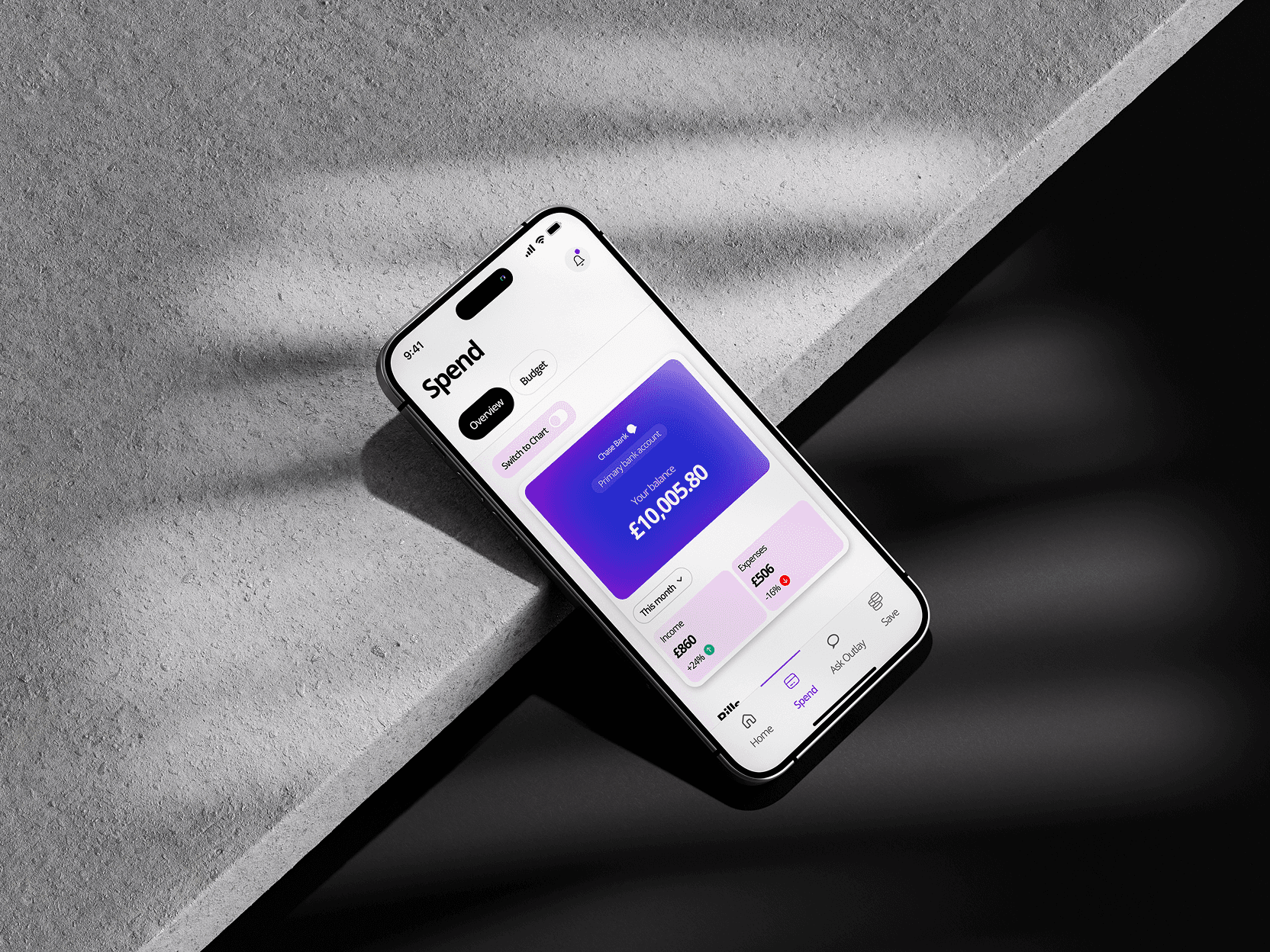
THE DESIGN PROCESS :
🚨 Understanding the Problem
I started by understanding the problem with a context of the UK where managing personal finances has become increasingly complex. Here are some of the notable problems:
Users hold multiple bank accounts and cards
Subscription services are hard to track and manage
Rising cost of living makes financial planning critical
Most banking apps are reactive, not proactive
Users don’t lack data, they lack clarity, guidance, and timely intervention
🎯 The Goal
The goal of this project is to design a system that:
Helps users understand their spending behaviour
Provides proactive financial insights
Encourages better decision-making in real-time
👥 Target Users
Young professionals (22–35)
Multi-account banking users
Digitally active consumers with recurring subscriptions
🔍 Key Insights gathered from Research
From research and behavioural analysis:
Users check their banking apps after spending, not before
Subscription costs are often underestimated
Financial stress is linked to lack of visibility + control
Users prefer simple, actionable insights over complex reports
💡 The Opportunity
Shift from “expense tracking” → to “financial coaching”
Instead of showing:
What users spent
We design for:
What users should do next
⚙️ Product Strategy, Thinking & Trade-offs
Why NOT build a full banking app?
Focus = intelligence layer, not infrastructure
Why AI coaching over manual budgeting?
Users don’t want to configure, they want guidance
Why simplified dashboard?
Reduces cognitive overload, thereby driving action
🎨 Design Approach
Minimal, distraction-free interface
Clear hierarchy of financial priorities
Behavioural nudges instead of overwhelming data
🚀 What Makes This Different
Unlike traditional finance apps:
Not reactive → proactive
Not data-heavy → action-focused
Not static → adaptive

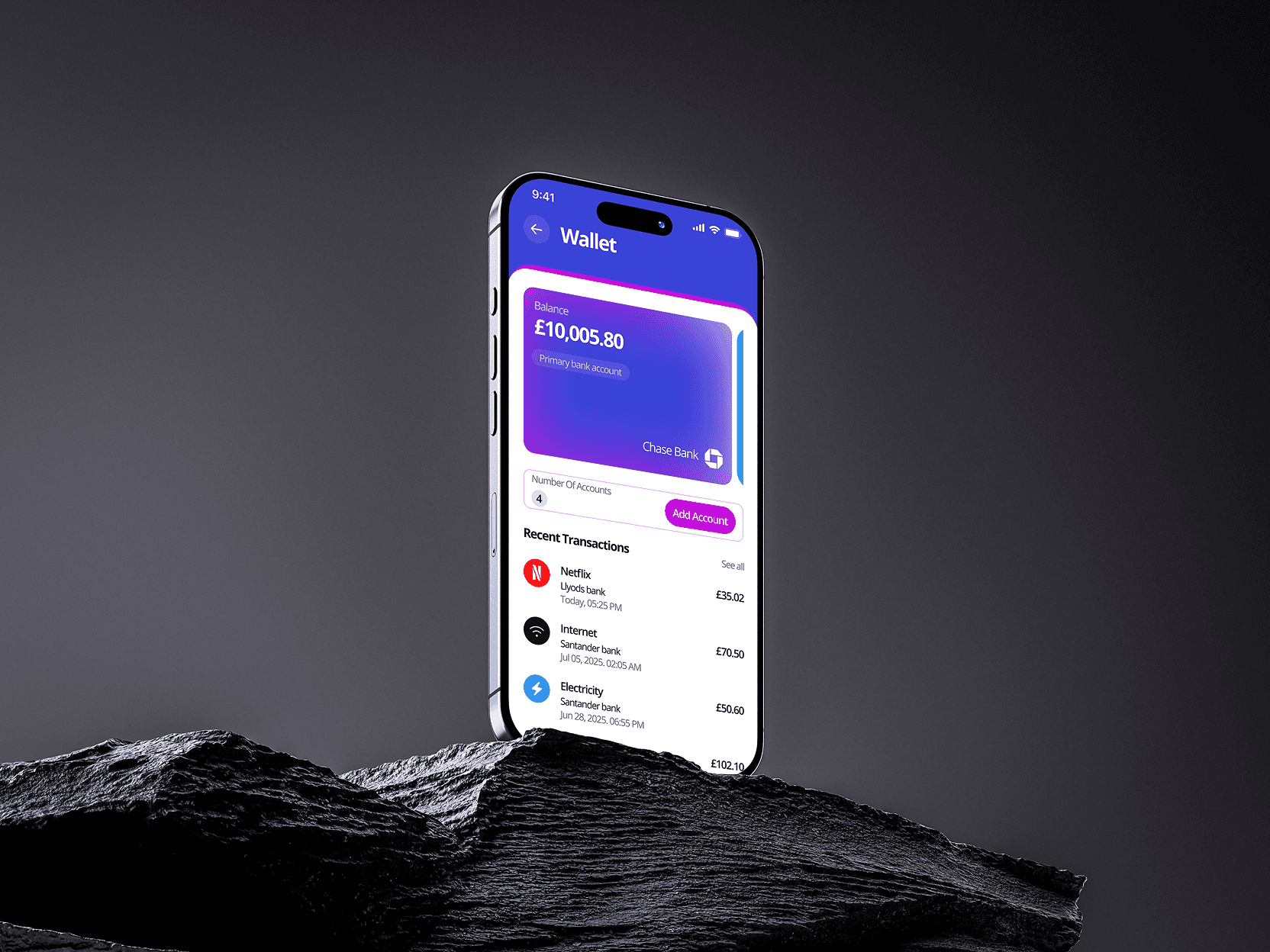
The Solution
For the solution, I introduced an intelligent layer within OutlayAI which includes the following key areas:
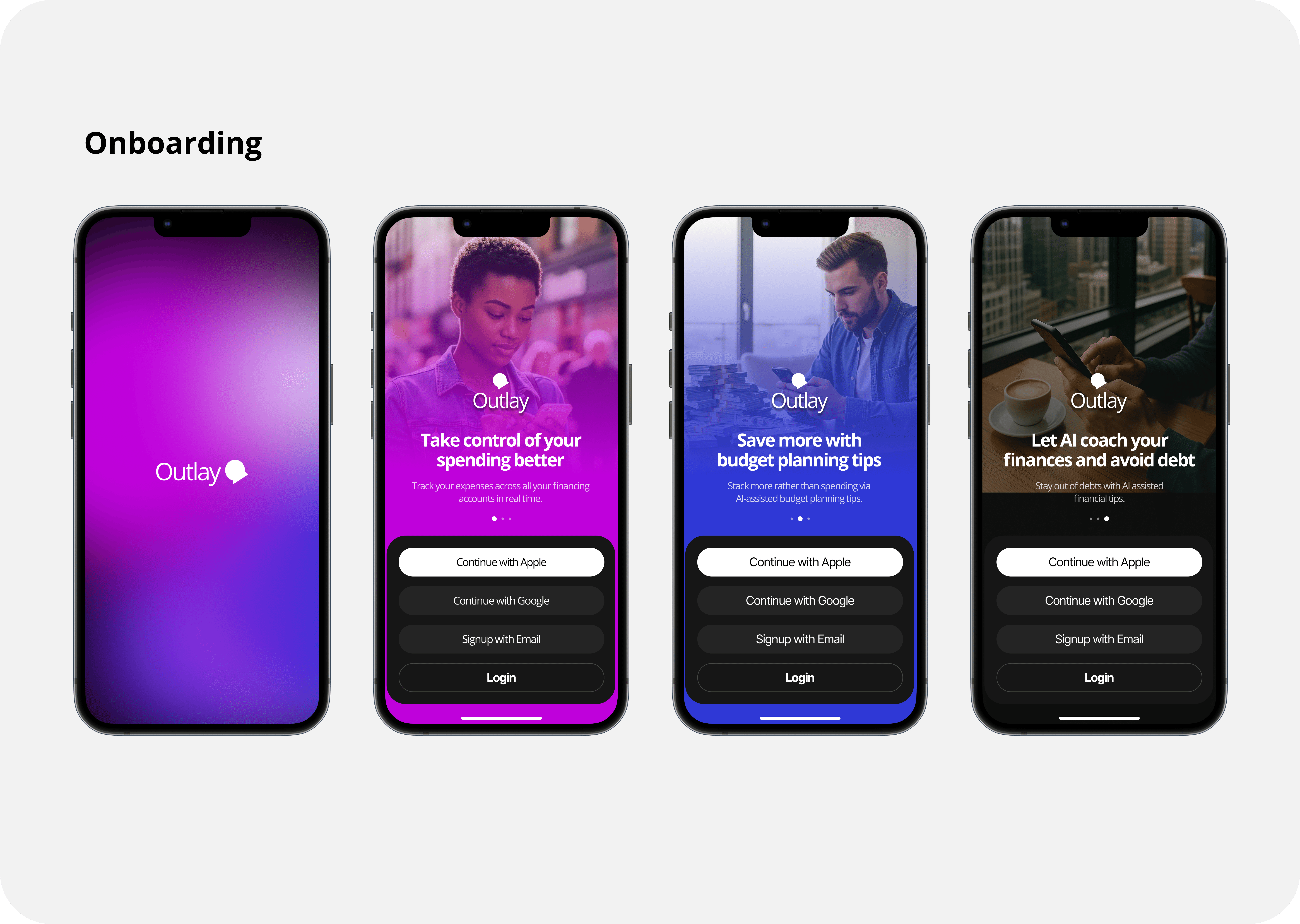
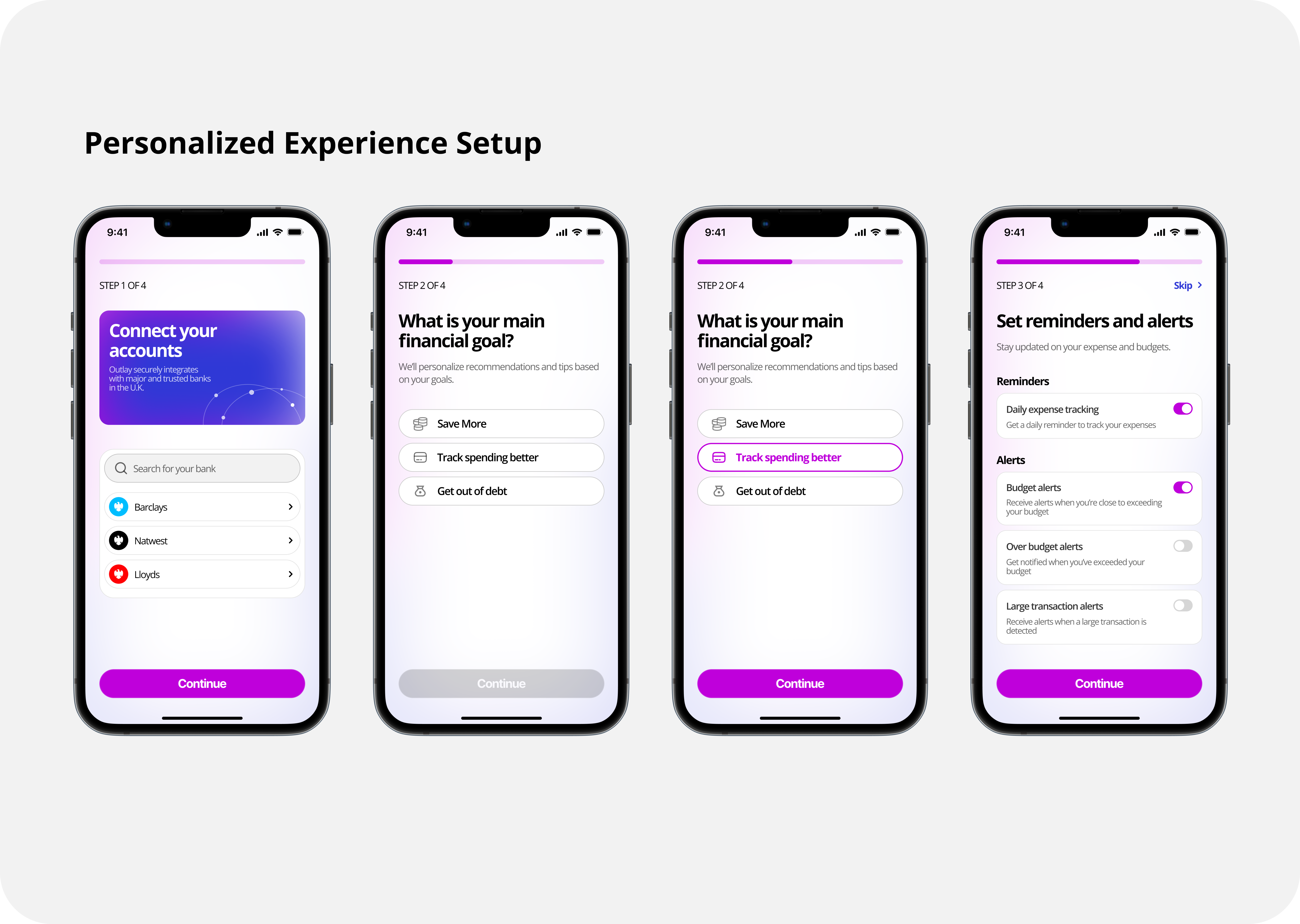
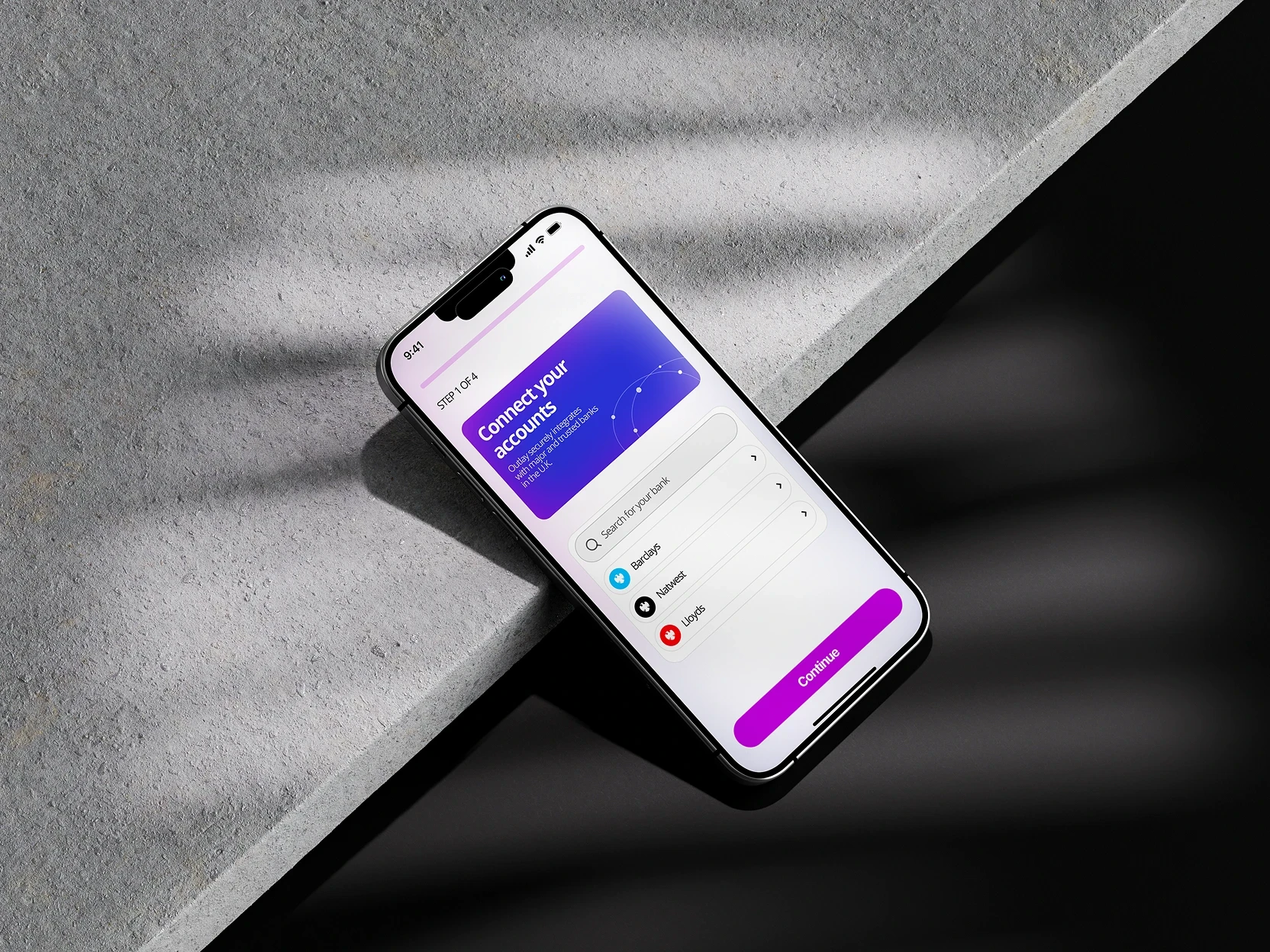
1. Personalized Onboarding Experience
This focuses on creating an intuitive and personalized onboarding experience.
Impact, Future Improvements & Reflection
📊 The Impactx (Simulated but realistic)
To reduce unnecessary spending by 28%
Expected to increase savings consistency by 35%
To improve user engagement by 2.3x through proactive alerts
🔮 Future Improvements
Open Banking integration (UK-specific)
Credit score insights
Rent & bill prediction models
Personalized financial goals
🧠 Reflection
This project strengthened my ability to:
Think beyond UI into product strategy
Design AI-driven user experiences
Align user needs with business impact
More Projects


UI / UX Design
Outlay AI
An AI-powered platform for effortless expense tracking, insights, and smarter financial decisions.
Year :
2025
Industry :
AI, Banking and Fintech
Client :
Concept Product
Project Duration :
2 months
Overview :
OutlayAI is an AI-powered expense coaching platform designed to help users proactively manage their finances, reduce unnecessary spending, and build sustainable financial habits.
This project explores how intelligent systems can move beyond passive tracking to actively guide users toward better financial outcomes. This solution will enable users to automate transactions across their connected accounts, set smart budgets, and offers personalized financial advice in an interactive way.
THE DESIGN PROCESS :
🚨 Understanding the Problem
I started by understanding the problem with a context of the UK where managing personal finances has become increasingly complex. Here are some of the notable problems:
Users hold multiple bank accounts and cards
Subscription services are hard to track and manage
Rising cost of living makes financial planning critical
Most banking apps are reactive, not proactive
Users don’t lack data, they lack clarity, guidance, and timely intervention
🎯 The Goal
The goal of this project is to design a system that:
Helps users understand their spending behaviour
Provides proactive financial insights
Encourages better decision-making in real-time
👥 Target Users
Young professionals (22–35)
Multi-account banking users
Digitally active consumers with recurring subscriptions
🔍 Key Insights gathered from Research
From research and behavioural analysis:
Users check their banking apps after spending, not before
Subscription costs are often underestimated
Financial stress is linked to lack of visibility + control
Users prefer simple, actionable insights over complex reports
💡 The Opportunity
Shift from “expense tracking” → to “financial coaching”
Instead of showing:
What users spent
We design for:
What users should do next
⚙️ Product Strategy, Thinking & Trade-offs
Why NOT build a full banking app?
Focus = intelligence layer, not infrastructure
Why AI coaching over manual budgeting?
Users don’t want to configure, they want guidance
Why simplified dashboard?
Reduces cognitive overload, thereby driving action
🎨 Design Approach
Minimal, distraction-free interface
Clear hierarchy of financial priorities
Behavioural nudges instead of overwhelming data
🚀 What Makes This Different
Unlike traditional finance apps:
Not reactive → proactive
Not data-heavy → action-focused
Not static → adaptive
The Solution
For the solution, I introduced an intelligent layer within OutlayAI which includes the following key areas:
1. Personalized Onboarding Experience
This focuses on creating an intuitive and personalized onboarding experience.
Impact, Future Improvements & Reflection
📊 The Impactx (Simulated but realistic)
To reduce unnecessary spending by 28%
Expected to increase savings consistency by 35%
To improve user engagement by 2.3x through proactive alerts
🔮 Future Improvements
Open Banking integration (UK-specific)
Credit score insights
Rent & bill prediction models
Personalized financial goals
🧠 Reflection
This project strengthened my ability to:
Think beyond UI into product strategy
Design AI-driven user experiences
Align user needs with business impact
More Projects
UI / UX Design
Outlay AI
An AI-powered platform for effortless expense tracking, insights, and smarter financial decisions.
Year :
2025
Industry :
AI, Banking and Fintech
Client :
Concept Product
Project Duration :
2 months
Overview :
OutlayAI is an AI-powered expense coaching platform designed to help users proactively manage their finances, reduce unnecessary spending, and build sustainable financial habits.
This project explores how intelligent systems can move beyond passive tracking to actively guide users toward better financial outcomes. This solution will enable users to automate transactions across their connected accounts, set smart budgets, and offers personalized financial advice in an interactive way.
THE DESIGN PROCESS :
🚨 Understanding the Problem
I started by understanding the problem with a context of the UK where managing personal finances has become increasingly complex. Here are some of the notable problems:
Users hold multiple bank accounts and cards
Subscription services are hard to track and manage
Rising cost of living makes financial planning critical
Most banking apps are reactive, not proactive
Users don’t lack data, they lack clarity, guidance, and timely intervention
🎯 The Goal
The goal of this project is to design a system that:
Helps users understand their spending behaviour
Provides proactive financial insights
Encourages better decision-making in real-time
👥 Target Users
Young professionals (22–35)
Multi-account banking users
Digitally active consumers with recurring subscriptions
🔍 Key Insights gathered from Research
From research and behavioural analysis:
Users check their banking apps after spending, not before
Subscription costs are often underestimated
Financial stress is linked to lack of visibility + control
Users prefer simple, actionable insights over complex reports
💡 The Opportunity
Shift from “expense tracking” → to “financial coaching”
Instead of showing:
What users spent
We design for:
What users should do next
⚙️ Product Strategy, Thinking & Trade-offs
Why NOT build a full banking app?
Focus = intelligence layer, not infrastructure
Why AI coaching over manual budgeting?
Users don’t want to configure, they want guidance
Why simplified dashboard?
Reduces cognitive overload, thereby driving action
🎨 Design Approach
Minimal, distraction-free interface
Clear hierarchy of financial priorities
Behavioural nudges instead of overwhelming data
🚀 What Makes This Different
Unlike traditional finance apps:
Not reactive → proactive
Not data-heavy → action-focused
Not static → adaptive
The Solution
For the solution, I introduced an intelligent layer within OutlayAI which includes the following key areas:
1. Personalized Onboarding Experience
This focuses on creating an intuitive and personalized onboarding experience.
Impact, Future Improvements & Reflection
📊 The Impactx (Simulated but realistic)
To reduce unnecessary spending by 28%
Expected to increase savings consistency by 35%
To improve user engagement by 2.3x through proactive alerts
🔮 Future Improvements
Open Banking integration (UK-specific)
Credit score insights
Rent & bill prediction models
Personalized financial goals
🧠 Reflection
This project strengthened my ability to:
Think beyond UI into product strategy
Design AI-driven user experiences
Align user needs with business impact