UI / UX Design
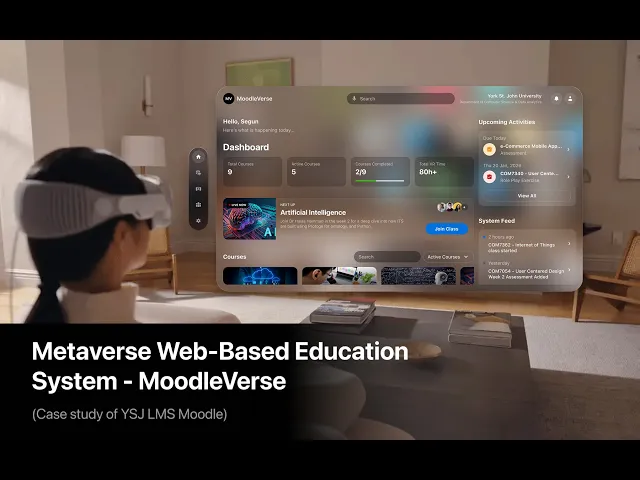
MoodleVerse
Designing a user-centered web gateway for metaverse learning in higher education
Year :
2026
Industry :
Education, Metaverse
Client :
York St John University Academic Task
Project Duration :
4 weeks (Dec 2025 - Jan 2026)
Introduction :
MoodleVerse is a design project exploring how immersive, metaverse-based learning can be made more usable and meaningful in higher education. While virtual reality and metaverse tools offer powerful opportunities for experiential learning, they are often difficult to use and poorly integrated into the systems students interact with every day.
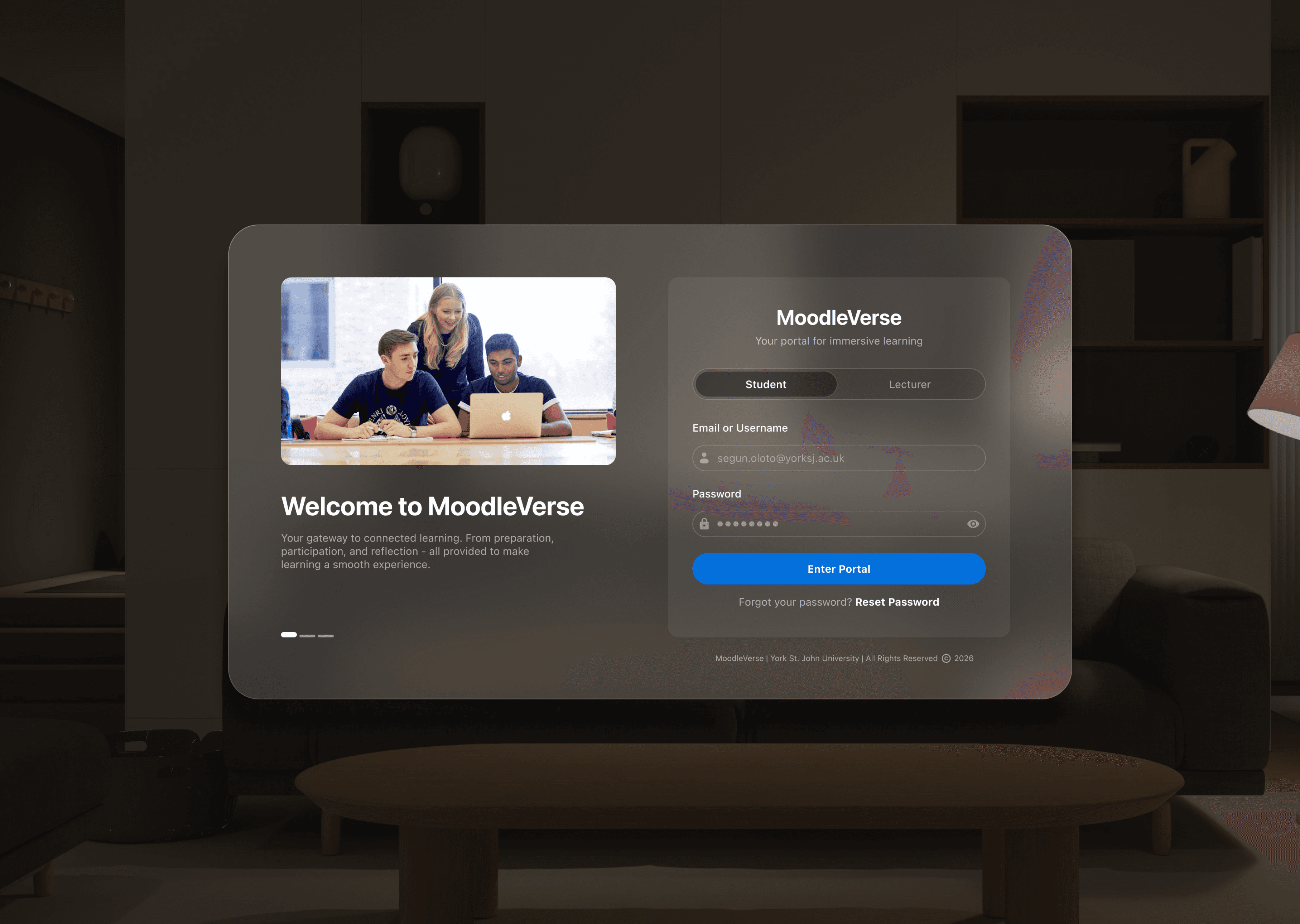
This project focuses on designing a metaverse-integrated web application that complements existing Learning Management Systems, rather than replacing them. Grounded in User-Centred Design principles and learning theory, MoodleVerse acts as a bridge between traditional LMS platforms and immersive learning experiences, helping students engage with simulations and role-play activities in a structured and supported way.
Problem :
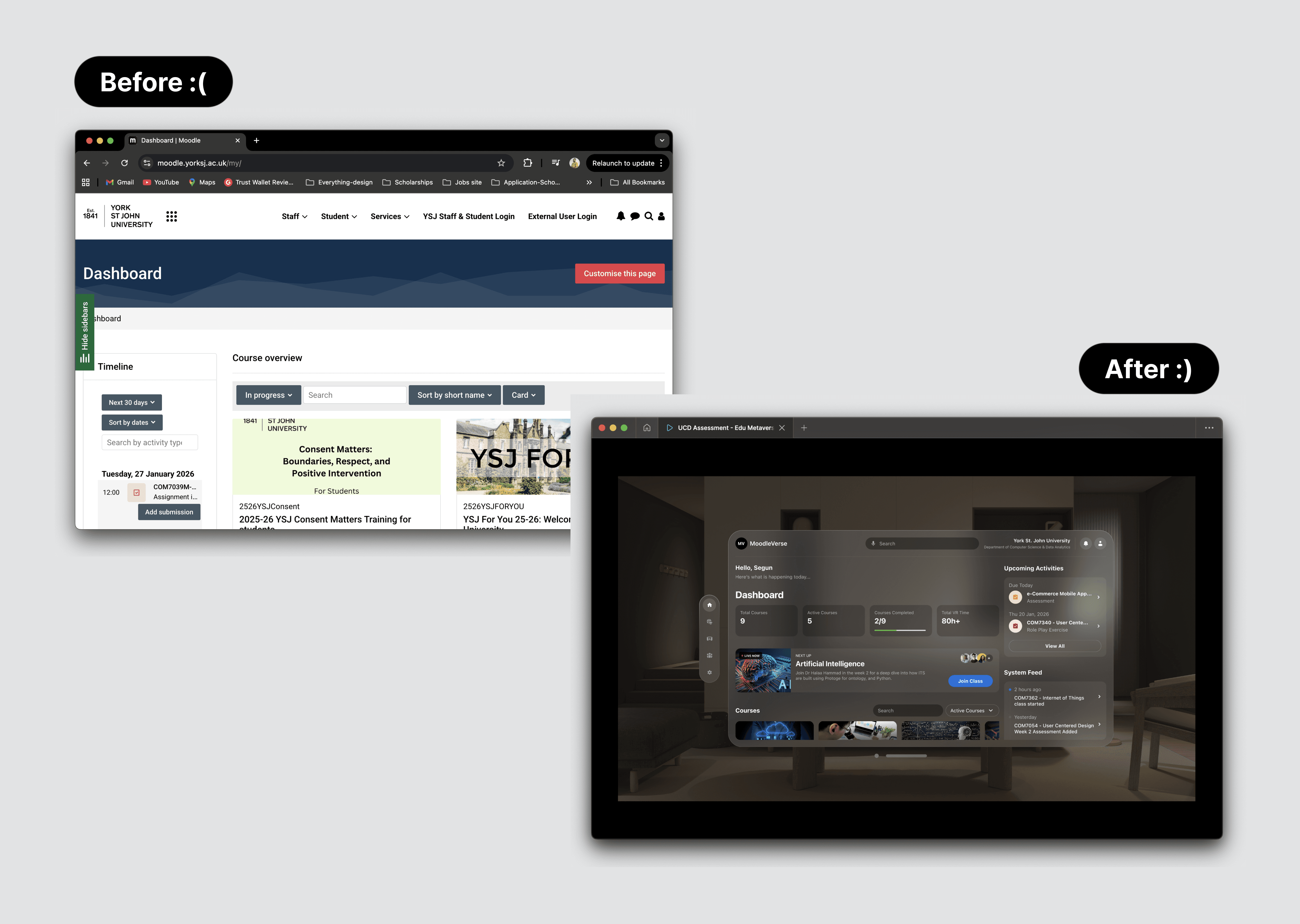
Universities rely heavily on Learning Management Systems such as Moodle to deliver education at scale. These platforms are effective for content delivery, assessment management, and communication, but they are largely content-driven and offer limited support for experiential learning.
At the same time, metaverse and VR learning platforms such as Engage VR, Virbela, and Mozilla Hubs (now taken down) enable immersive and collaborative experiences. However, research shows that these systems often prioritize immersion over usability, resulting in high cognitive load, unclear learning pathways, and limited academic integration. Learners are required to switch between platforms with little guidance on how immersive activities fit into their courses.
Research in experiential learning highlights that meaningful learning occurs through experience, reflection, and application (Kolb, 1984). However, many immersive learning tools lack the structure needed to support this learning cycle.
THE GAP:
The gap lies not in the immersive technology itself, but in the absence of user-centered, web-based systems that support preparation, participation, and reflection around immersive learning.
How I Did It :
The project followed a User-Centred Design (UCD) approach guided by ISO 9241-210. Rather than focusing on the technical implementation of the metaverse, the design process centred on learners’ needs and experiences.
I conducted secondary research into metaverse-based education, experiential learning, and cognitive load. This was supported by informal discussions with five university students to understand their expectations, concerns, and learning habits. From these insights, I identified key user needs, including clarity before immersive activities, guided participation, familiar interfaces, and opportunities for reflection.
These findings informed the creation of a user persona and the definition of functional and non-functional requirements. I then designed high-fidelity prototypes of MoodleVerse, focusing on a structured learning flow: Prepare → Experience → Reflect.
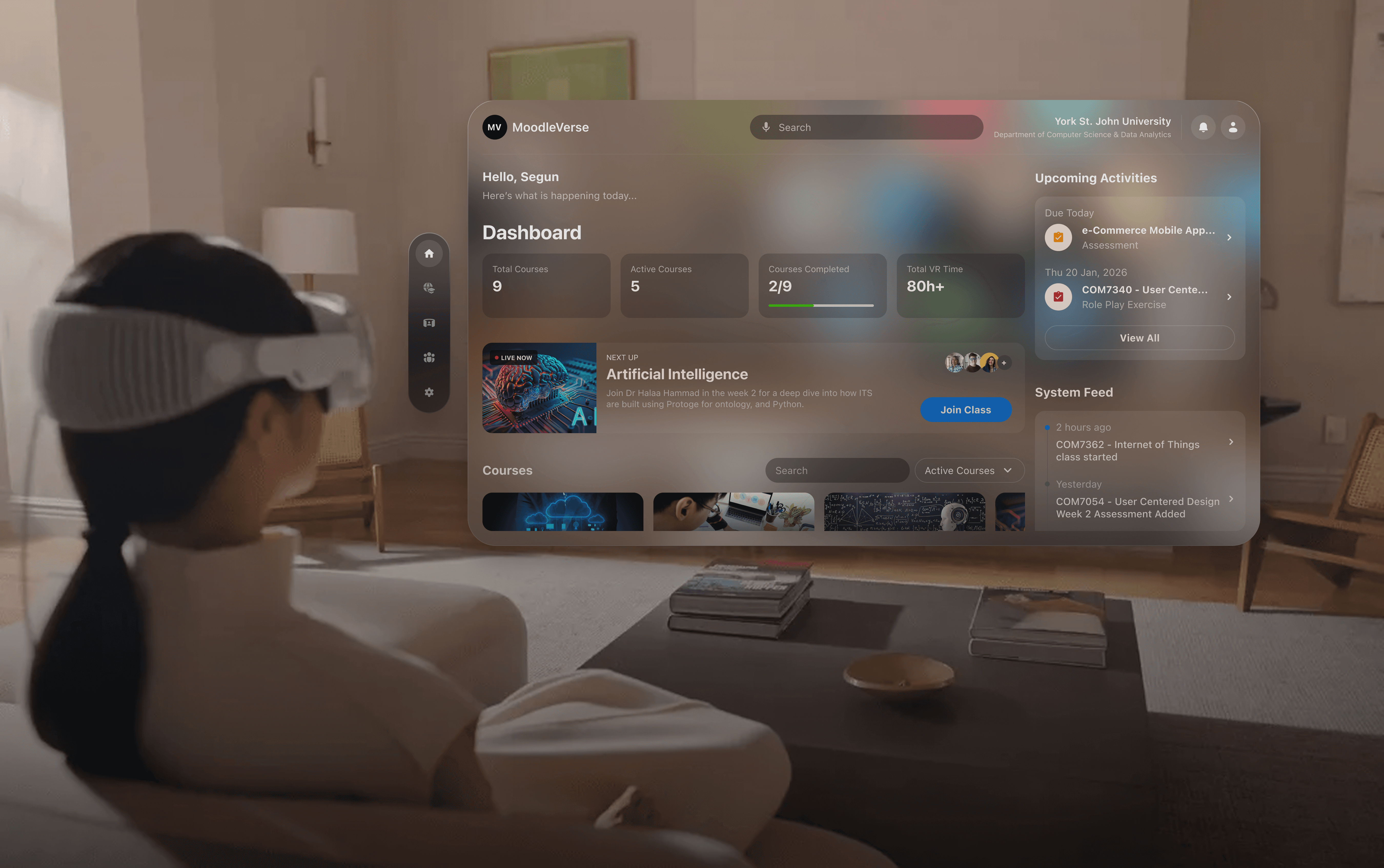
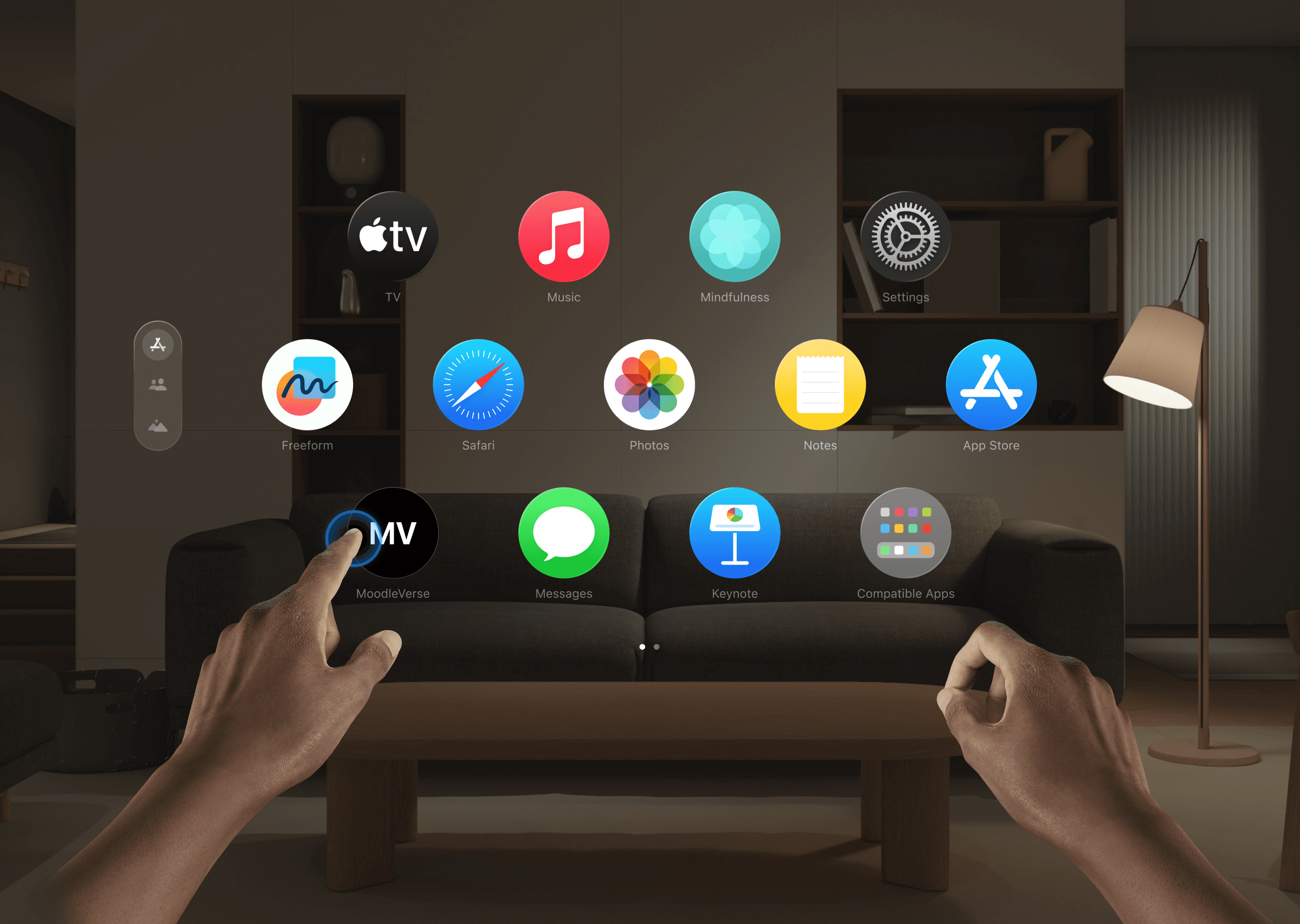
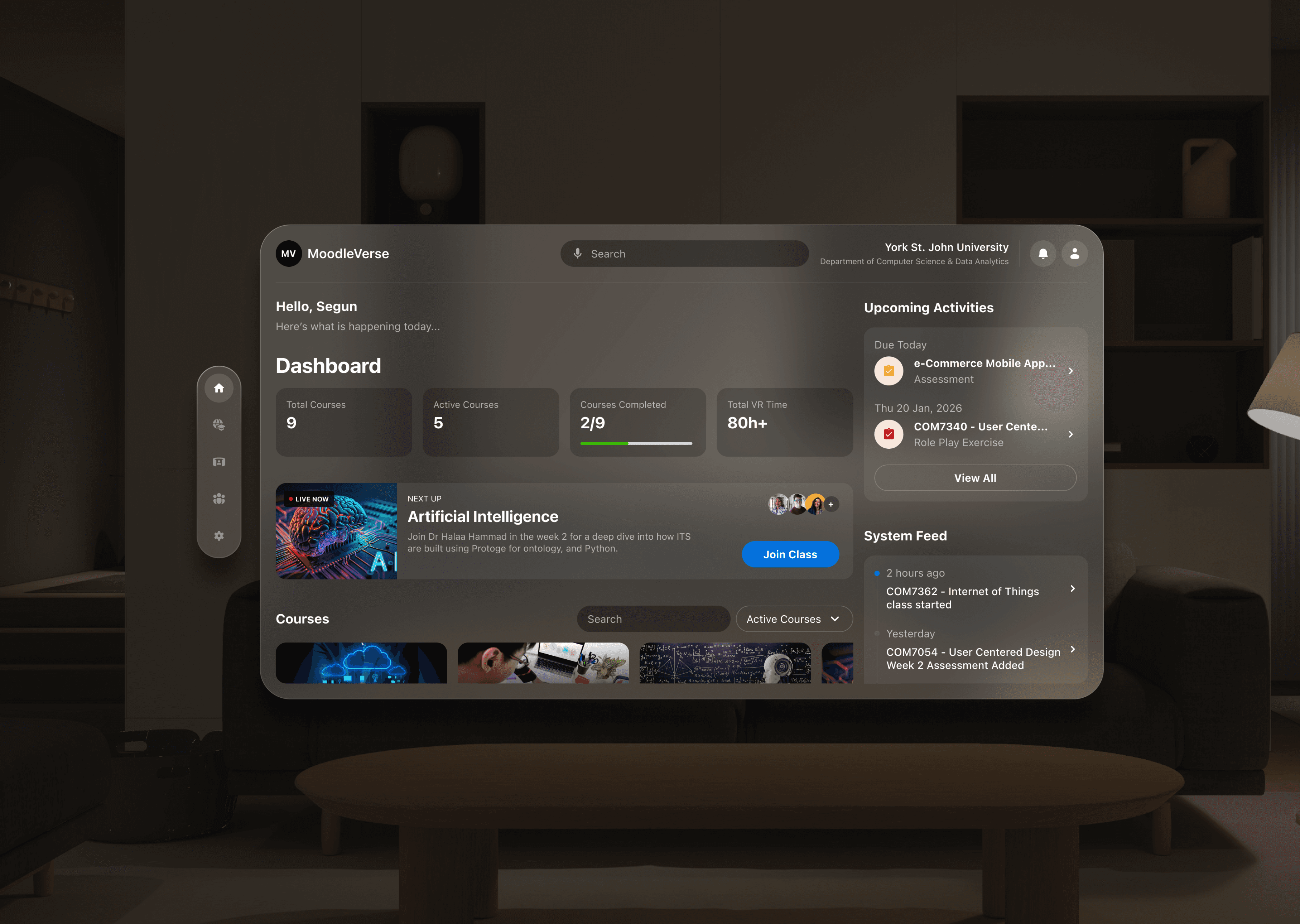
The system was designed as a responsive web application accessible on desktop and within VR environments such as Apple Vision Pro and Meta Quest, where it appears as a spatial web interface rather than a fully immersive world.
Results :
The final outcome is a high-fidelity prototype demonstrating how immersive learning can be better integrated into higher education.
WHAT WAS DESIGNED:
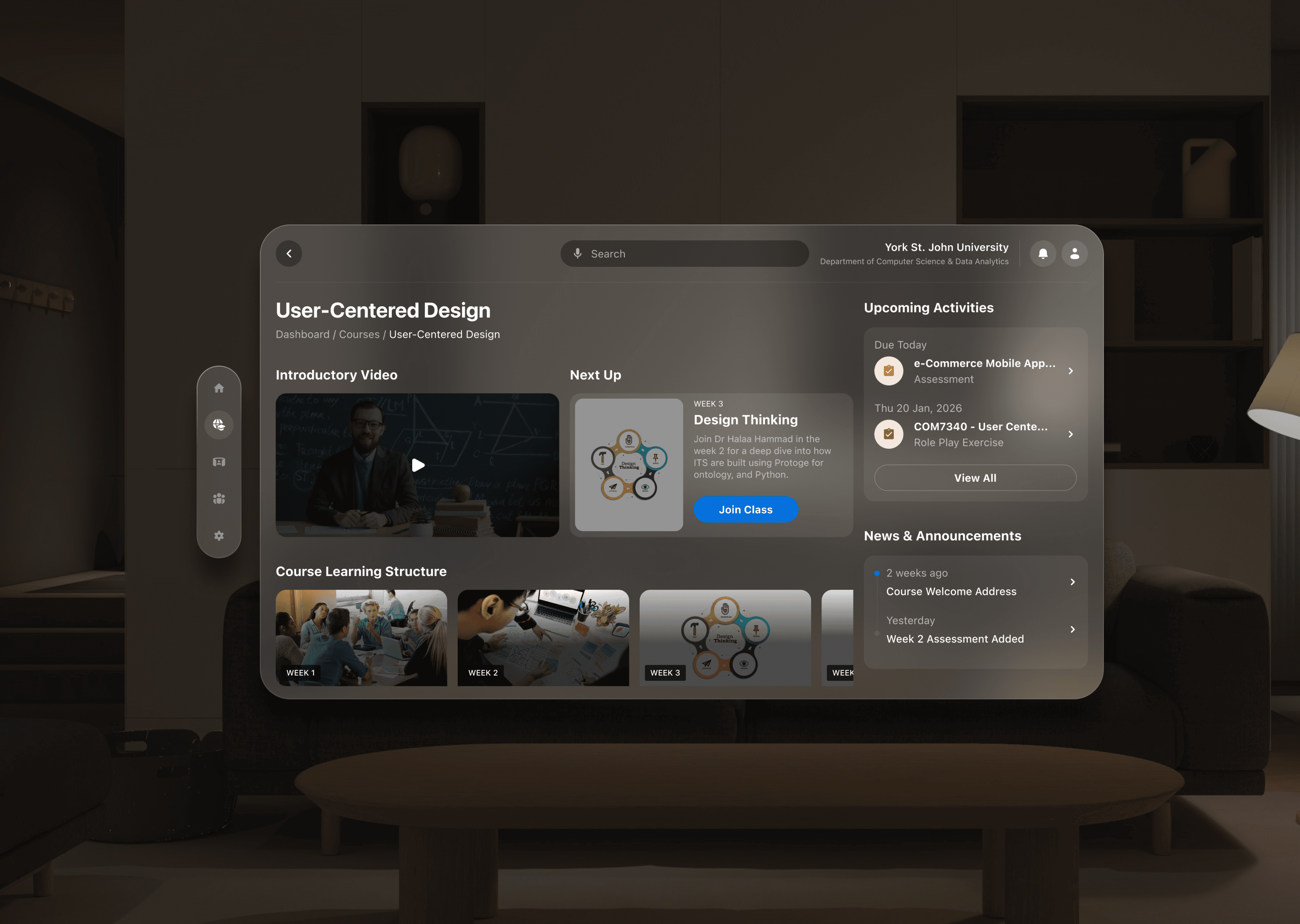
Centralized Dashboard with Learning Overview: Provides quick overview of learning activities.
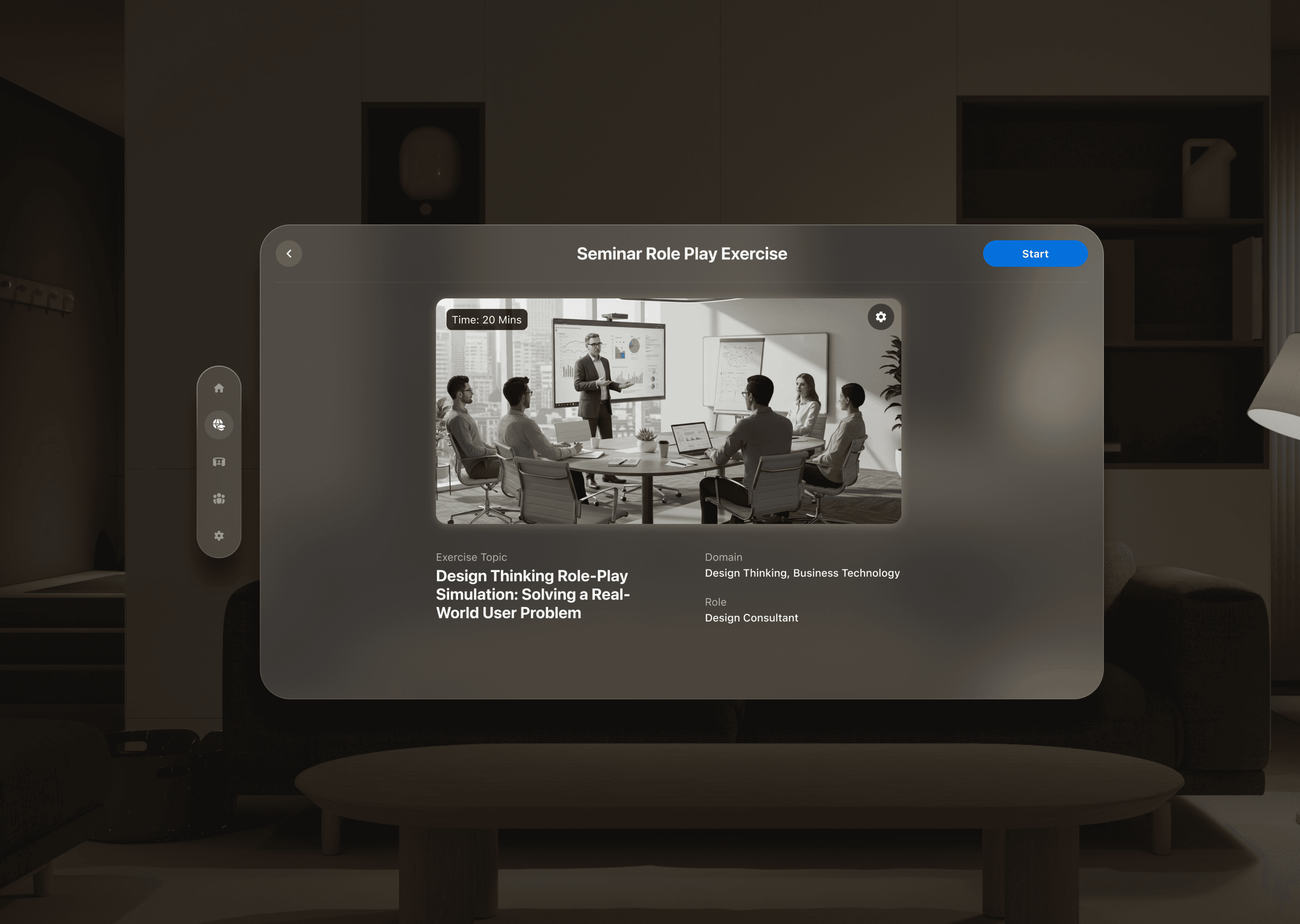
Guided Simulation and Role-Play Exercises: Presents a user-centered approach to practical learning through guided simulation and role-play exercises.

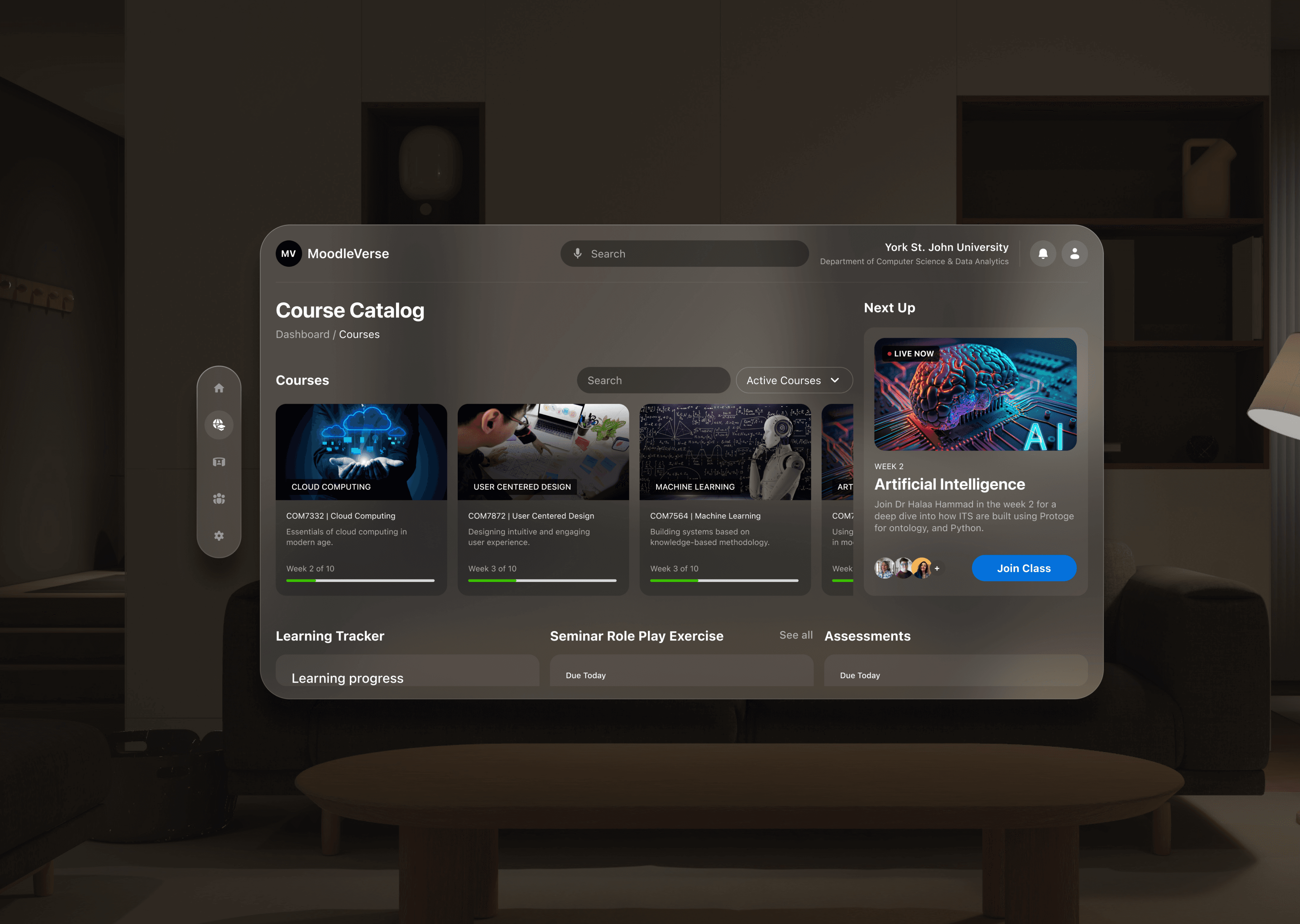
Progress Tracking and Reflection Tools: Provides progress on learning and performance tracking for reflection.
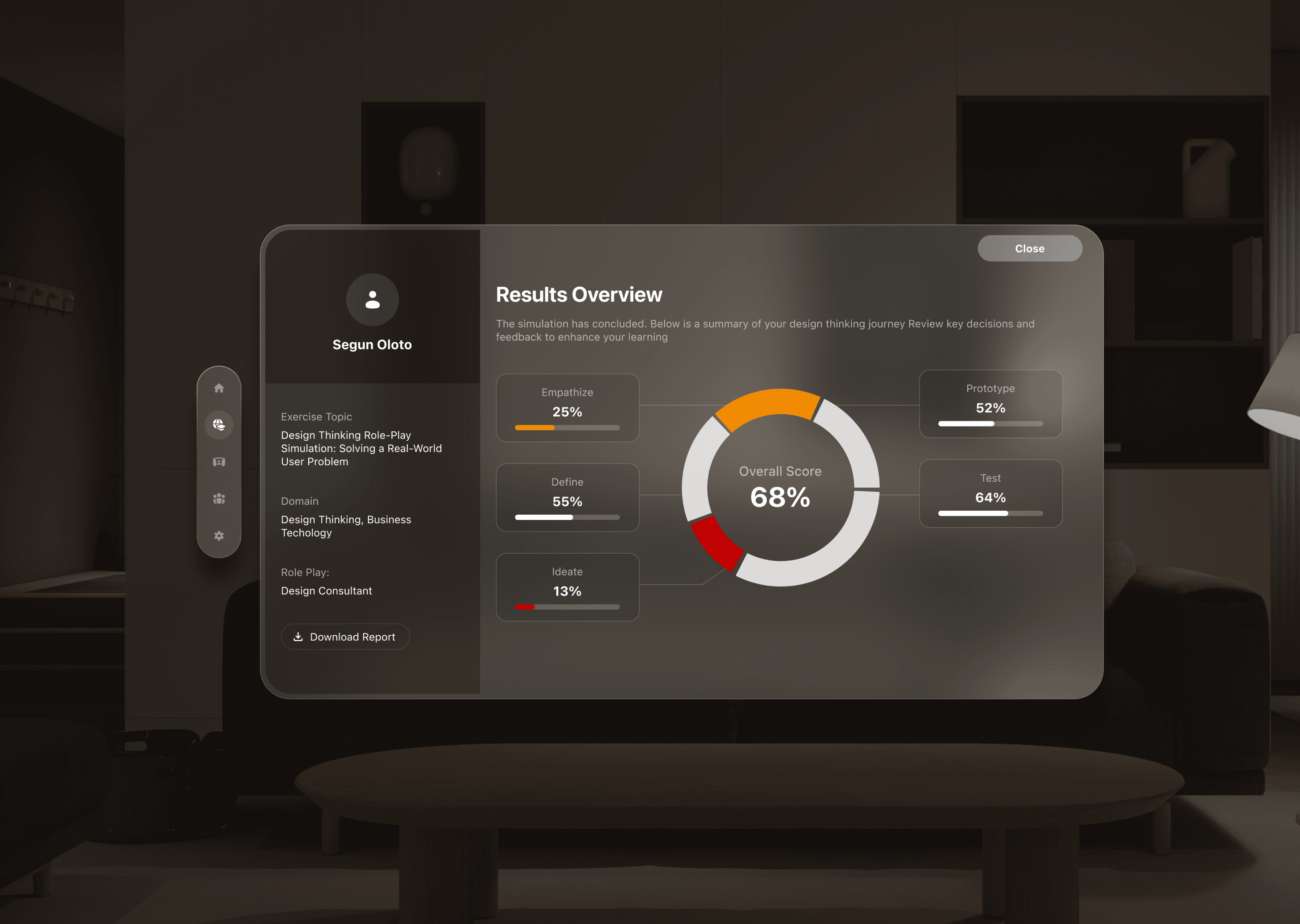
Clear connection Between Immersive Activities and Coursework: Provides a connected avenue for managing courses, managing class attendance and joining live class using widgets that captures this such as the Course tab, Next live class, Learning tracker, assessments and Role play exercises.
WATCH VIDEO DEMO:
IMPACT AND VALUE:
Improved learning clarity and confidence
Reduced cognitive load through familiar design
Increased engagement through guided immersion
Better integration between LMS workflows and immersive learning
KEY TAKEAWAY:
Effective metaverse learning depends on good UX and structure, not just advanced technology
More Projects



UI / UX Design
MoodleVerse
Designing a user-centered web gateway for metaverse learning in higher education
Year :
2026
Industry :
Education, Metaverse
Client :
York St John University Academic Task
Project Duration :
4 weeks (Dec 2025 - Jan 2026)
Introduction :
MoodleVerse is a design project exploring how immersive, metaverse-based learning can be made more usable and meaningful in higher education. While virtual reality and metaverse tools offer powerful opportunities for experiential learning, they are often difficult to use and poorly integrated into the systems students interact with every day.
This project focuses on designing a metaverse-integrated web application that complements existing Learning Management Systems, rather than replacing them. Grounded in User-Centred Design principles and learning theory, MoodleVerse acts as a bridge between traditional LMS platforms and immersive learning experiences, helping students engage with simulations and role-play activities in a structured and supported way.
Problem :
Universities rely heavily on Learning Management Systems such as Moodle to deliver education at scale. These platforms are effective for content delivery, assessment management, and communication, but they are largely content-driven and offer limited support for experiential learning.
At the same time, metaverse and VR learning platforms such as Engage VR, Virbela, and Mozilla Hubs (now taken down) enable immersive and collaborative experiences. However, research shows that these systems often prioritize immersion over usability, resulting in high cognitive load, unclear learning pathways, and limited academic integration. Learners are required to switch between platforms with little guidance on how immersive activities fit into their courses.
Research in experiential learning highlights that meaningful learning occurs through experience, reflection, and application (Kolb, 1984). However, many immersive learning tools lack the structure needed to support this learning cycle.
THE GAP:
The gap lies not in the immersive technology itself, but in the absence of user-centered, web-based systems that support preparation, participation, and reflection around immersive learning.
How I Did It :
The project followed a User-Centred Design (UCD) approach guided by ISO 9241-210. Rather than focusing on the technical implementation of the metaverse, the design process centred on learners’ needs and experiences.
I conducted secondary research into metaverse-based education, experiential learning, and cognitive load. This was supported by informal discussions with five university students to understand their expectations, concerns, and learning habits. From these insights, I identified key user needs, including clarity before immersive activities, guided participation, familiar interfaces, and opportunities for reflection.
These findings informed the creation of a user persona and the definition of functional and non-functional requirements. I then designed high-fidelity prototypes of MoodleVerse, focusing on a structured learning flow: Prepare → Experience → Reflect.
The system was designed as a responsive web application accessible on desktop and within VR environments such as Apple Vision Pro and Meta Quest, where it appears as a spatial web interface rather than a fully immersive world.
Results :
The final outcome is a high-fidelity prototype demonstrating how immersive learning can be better integrated into higher education.
WHAT WAS DESIGNED:
Centralized Dashboard with Learning Overview: Provides quick overview of learning activities.
Guided Simulation and Role-Play Exercises: Presents a user-centered approach to practical learning through guided simulation and role-play exercises.
Progress Tracking and Reflection Tools: Provides progress on learning and performance tracking for reflection.
Clear connection Between Immersive Activities and Coursework: Provides a connected avenue for managing courses, managing class attendance and joining live class using widgets that captures this such as the Course tab, Next live class, Learning tracker, assessments and Role play exercises.
WATCH VIDEO DEMO:
IMPACT AND VALUE:
Improved learning clarity and confidence
Reduced cognitive load through familiar design
Increased engagement through guided immersion
Better integration between LMS workflows and immersive learning
KEY TAKEAWAY:
Effective metaverse learning depends on good UX and structure, not just advanced technology
More Projects
UI / UX Design
MoodleVerse
Designing a user-centered web gateway for metaverse learning in higher education
Year :
2026
Industry :
Education, Metaverse
Client :
York St John University Academic Task
Project Duration :
4 weeks (Dec 2025 - Jan 2026)
Introduction :
MoodleVerse is a design project exploring how immersive, metaverse-based learning can be made more usable and meaningful in higher education. While virtual reality and metaverse tools offer powerful opportunities for experiential learning, they are often difficult to use and poorly integrated into the systems students interact with every day.
This project focuses on designing a metaverse-integrated web application that complements existing Learning Management Systems, rather than replacing them. Grounded in User-Centred Design principles and learning theory, MoodleVerse acts as a bridge between traditional LMS platforms and immersive learning experiences, helping students engage with simulations and role-play activities in a structured and supported way.
Problem :
Universities rely heavily on Learning Management Systems such as Moodle to deliver education at scale. These platforms are effective for content delivery, assessment management, and communication, but they are largely content-driven and offer limited support for experiential learning.
At the same time, metaverse and VR learning platforms such as Engage VR, Virbela, and Mozilla Hubs (now taken down) enable immersive and collaborative experiences. However, research shows that these systems often prioritize immersion over usability, resulting in high cognitive load, unclear learning pathways, and limited academic integration. Learners are required to switch between platforms with little guidance on how immersive activities fit into their courses.
Research in experiential learning highlights that meaningful learning occurs through experience, reflection, and application (Kolb, 1984). However, many immersive learning tools lack the structure needed to support this learning cycle.
THE GAP:
The gap lies not in the immersive technology itself, but in the absence of user-centered, web-based systems that support preparation, participation, and reflection around immersive learning.
How I Did It :
The project followed a User-Centred Design (UCD) approach guided by ISO 9241-210. Rather than focusing on the technical implementation of the metaverse, the design process centred on learners’ needs and experiences.
I conducted secondary research into metaverse-based education, experiential learning, and cognitive load. This was supported by informal discussions with five university students to understand their expectations, concerns, and learning habits. From these insights, I identified key user needs, including clarity before immersive activities, guided participation, familiar interfaces, and opportunities for reflection.
These findings informed the creation of a user persona and the definition of functional and non-functional requirements. I then designed high-fidelity prototypes of MoodleVerse, focusing on a structured learning flow: Prepare → Experience → Reflect.
The system was designed as a responsive web application accessible on desktop and within VR environments such as Apple Vision Pro and Meta Quest, where it appears as a spatial web interface rather than a fully immersive world.
Results :
The final outcome is a high-fidelity prototype demonstrating how immersive learning can be better integrated into higher education.
WHAT WAS DESIGNED:
Centralized Dashboard with Learning Overview: Provides quick overview of learning activities.
Guided Simulation and Role-Play Exercises: Presents a user-centered approach to practical learning through guided simulation and role-play exercises.
Progress Tracking and Reflection Tools: Provides progress on learning and performance tracking for reflection.
Clear connection Between Immersive Activities and Coursework: Provides a connected avenue for managing courses, managing class attendance and joining live class using widgets that captures this such as the Course tab, Next live class, Learning tracker, assessments and Role play exercises.
WATCH VIDEO DEMO:
IMPACT AND VALUE:
Improved learning clarity and confidence
Reduced cognitive load through familiar design
Increased engagement through guided immersion
Better integration between LMS workflows and immersive learning
KEY TAKEAWAY:
Effective metaverse learning depends on good UX and structure, not just advanced technology